
HEALTH SCIENCE LEXICON
Brain Fog
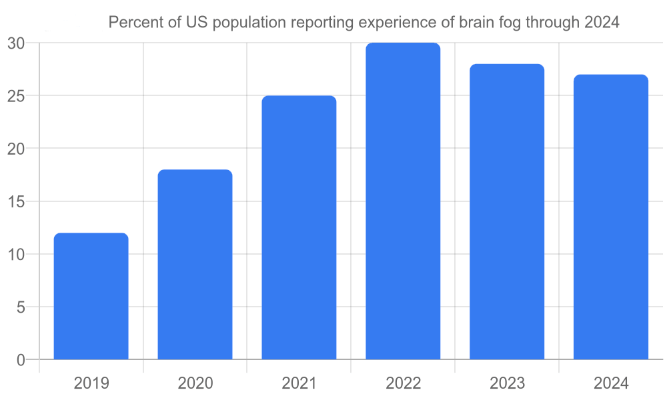
What is Brain Fog?
Brain Fog is a term used when you’re feeling like you can’t think clearly or focus. You might feel confused or just “Out of it”. In reality, fog (low, dense water vapor) obscures vision. Brain “fog” is a metaphor for lack of cognitive clarify or when you find it difficult to concentrate or remember information that you previously knew, and had less trouble recalling. You might forget things easily, struggle to make decisions, or have trouble finding the right words to say. It’s important to know that brain fog isn’t a medical condition on its own, but it’s often a symptom of other health problems.
In a more advanced understanding, Brain Fog is characterized by cognitive impairments to memoryMemory is how your brain stors information for recall, later. It’s your own special filing system where it keeps information you’ve learned and experiences you’ve had. Sometimes you can recall this information easily, and sometimes you might find it hard… Continue to full entry, attention, executive function, and the speed of cognitive processing. Many people experience brain fog at some point in their lives, often during times of stress or when they are tired.
Brain fog is not a medically recognized condition but rather a symptom of an underlying issue. It can be caused by a variety of factors, such as lack of sleep, hormonal imbalances, nutritional deficiencies, or certain medical conditions. Some research suggests that inflammation in the body may also play a role in the development of brain fog. Further studies are needed to fully understand the mechanisms behind this phenomenon.
While not a medical condition, Brain Fog is commonly associated with a wide range of medical and mental health conditions including Chronic Fatigue Syndrome, autoimmune diseases, and neurodegenerative disorders.
External source information references for ‘Brain Fog’:
- Harvard Health → Brain fog: What is it?
- Mayo Clinic → Chronic Fatigue Syndrome
- WebMD → What’s Causing Your Brain Fog?
- Medical News Today → Why you feel tired all the time
- The New York Times → ‘I Feel Like I Have Dementia’: Brain Fog Plagues Covid Survivors