
HEALTH SCIENCE LEXICON
Lions Mane
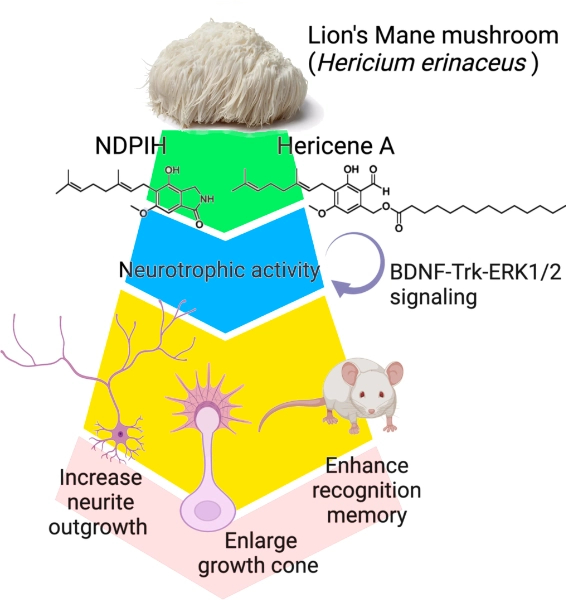
What is Lions Mane?
Lions Mane is a type of medicinal mushroom that has been used for centuries in traditional Chinese medicine. Known for its distinctive appearance resembling a lion’s mane, this mushroom is commonly used as a health supplement. It is believed to offer numerous health benefits, including boosting the immune system and promoting cognitive health.
Scientific name of Lions Mane is Hericium erinaceus, a nootropic (cognitive-enhancing) fungus recognized for its bioactive compounds like hericenones and erinacines that may have neuroprotective and neuroregenerative effects. This mushroom is extensively studied for its potential to stimulate the production of Nerve Growth Factor (NGF), integral to neural health, providing medicinal and neurotrophic benefits.
Synergistic or Compounding Nutrients
- Fish Oil
- Vitamin B12
- Vitamin D
- Turmeric
- Resveratrol
- Green Tea
- Ginkgo BilobaGinkgo Biloba is a type of tree. It has been growing on earth for hundreds of millions of years. It’s a living fossil. Its leaves are used to make an extract that people consume to improve functional brain performance. Continue to full entry
- Magnesium
Top Benefits of Lions Mane
- Cognitive booster
- Supports memory and brain health
- Improves focus and concentration
- Supports nerve growth
- Promotes accelerated learning
- Boosts mental clarity
- Enhances mood
- Boosts immune system
- Supports gut health
- Reduces oxidative stress
Evidence-Based Research Sources for Lions Mane
- PubMed → Neurological Activity of Lion’s Mane (Hericium erinaceus)
- Harvard Health → Boosting Your Immune System
- WebMD → Lions Mane Mushroom
- National Institute of Health → Fueling Dietary Supplement Growth
- The National Center for Biotechnology Information → Hericium erinaceus: An edible mushroom with medicinal values